01 · The product

Two products. One solution.

Ankaferd Blood Stopper® is an entirely herbal topical haemostatic: a standardised mixture of five plant extracts⁠1. We distribute it in two forms: Push & Stop for first aid, and an absorbable wound dressing for surgical use.

Type
Topical haemostatic solution
Products
Push & Stop · Absorbable wound dressing
Approved
Turkish Ministry of Health, for local applications in dental and superficial bleeding⁠2
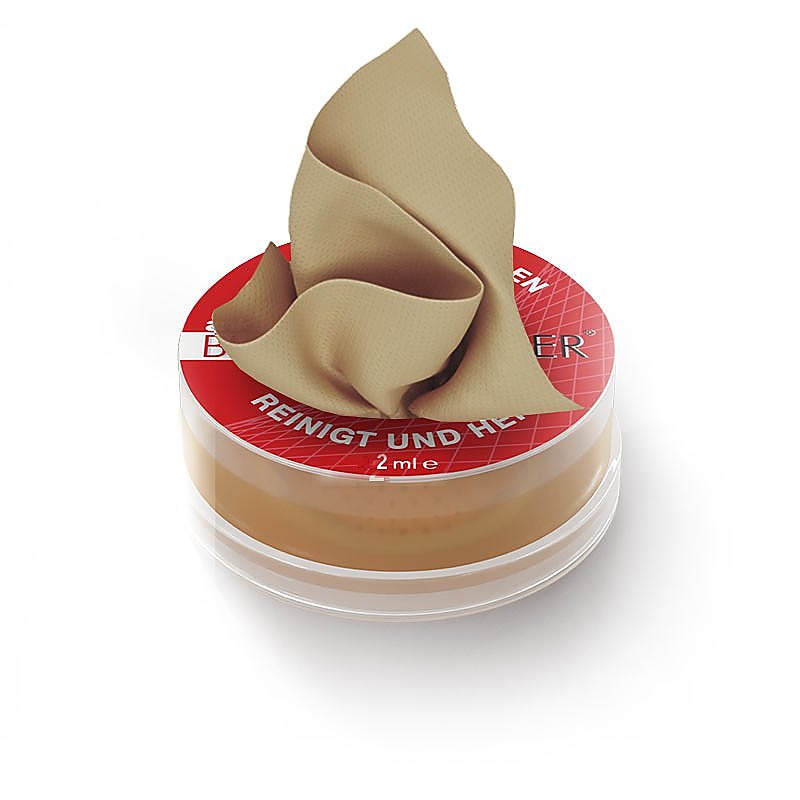
Push & Stop with the soaked cloth raised from the applicator
Fig. 1Push & Stop: the dry cloth has soaked up the plant-based solution and is raised from the applicator, ready to press onto the bleeding site.

What it is

Entirely herbal, standardised.

Ankaferd Blood Stopper® (often shortened to ABS) is a topical haemostatic made from a standardised mixture of five plant extracts⁠1. It is applied to the bleeding surface, not taken by mouth or injected.

It is described as the first Turkish medical product officially recognised by the Turkish Ministry of Health⁠3 (primary source to follow), and is approved there for local applications in dental and superficial bleeding⁠2. Final development and testing are associated with the haematology department of Hacettepe University in Ankara⁠3, and it is used in Turkish hospitals and ambulances for external bleeding⁠3 (primary sources to follow).

Composition

Standardised extract mixture⁠1

  1. Thymus vulgarisThyme
  2. Glycyrrhiza glabraLiquorice
  3. Vitis viniferaGrape vine
  4. Alpinia officinarumLesser galangal
  5. Urtica dioicaStinging nettle

Proportions and excipients: see the Instructions for Use

Meet the five plants

The products

Two products, one solution.

We distribute two forms of Ankaferd Blood Stopper® in Germany: one for first aid, one for the operating room. Both carry the same five-plant solution, applied topically, and both are sterile according to the manufacturer.

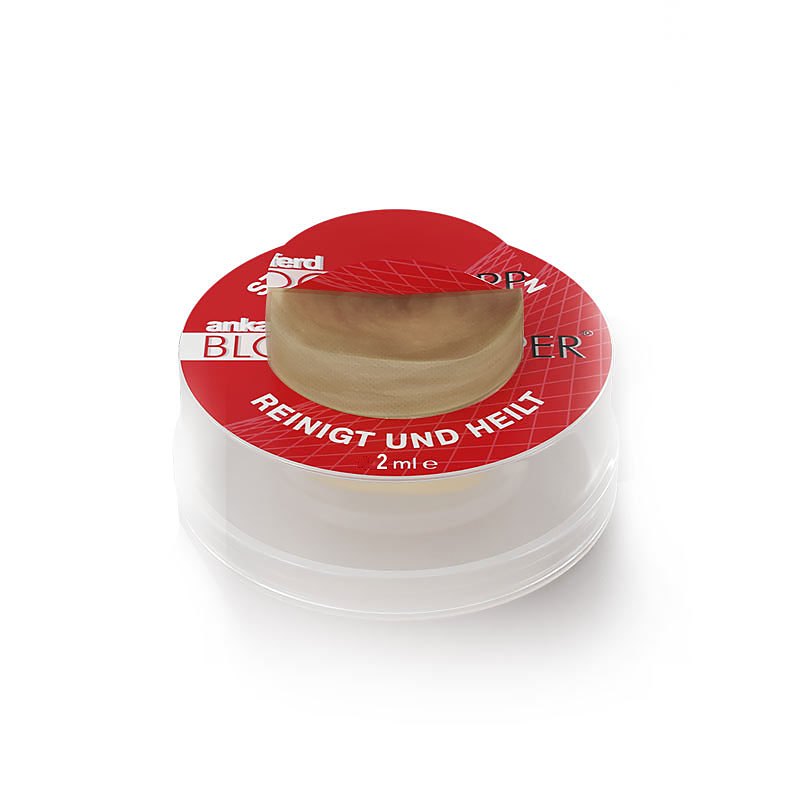
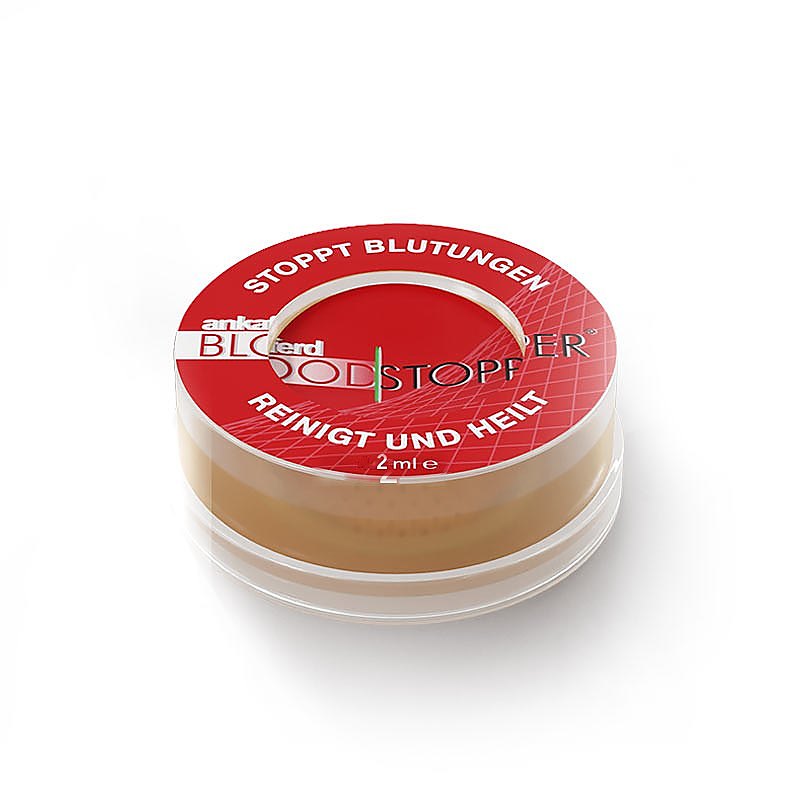
Push & Stop applicator, closed, with its press lid
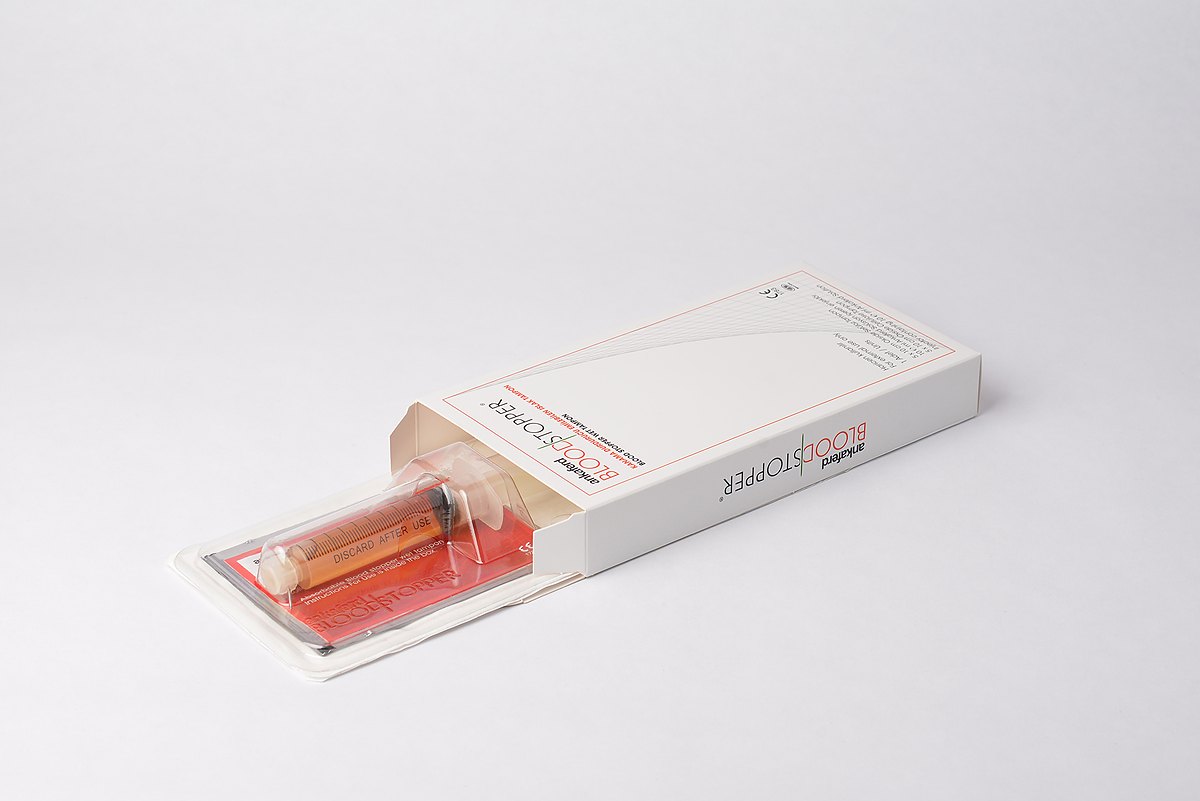
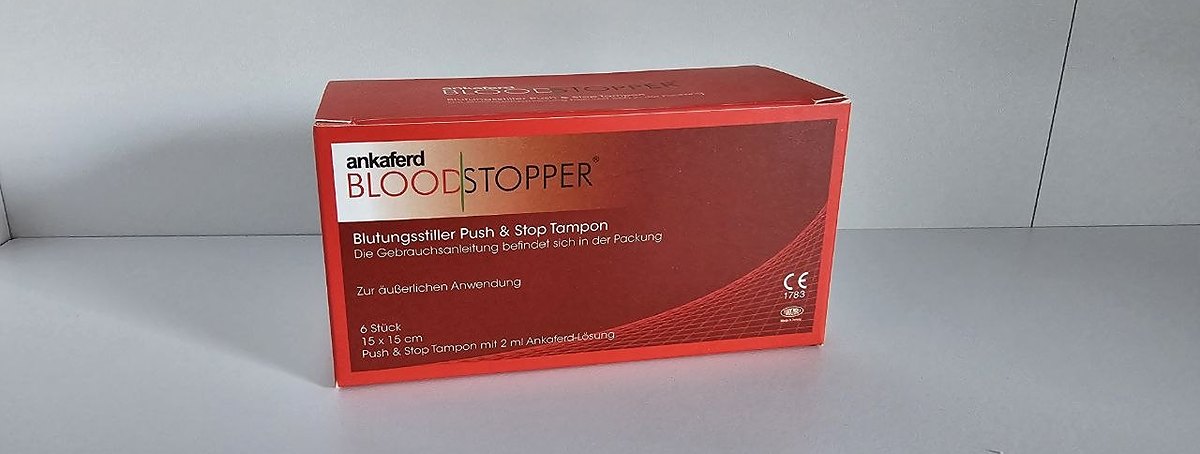
Push & Stop retail pack (box of 6 × 2 ml, 15 × 15 cm)
The German retail pack: box of 6, 18 × 22 cm.

01First aid · on the go

Push & Stop

German name: Push & Stop

Press the lid and the dry cloth soaks up the plant-based solution, ready to press onto a bleeding wound. Made for first-aid kits, the car and the pharmacy shelf.

Intended use
First aid, cars, pharmacies (per the manufacturer)
Size
15 × 15 cm · 2 ml
Pack
6 sterile
PZN (Germany)
18276168 (6 × 2 ml)
Where to buy
Online shop doc3.de, and pharmacies in Germany
Buy Push & Stop How Push & Stop is used

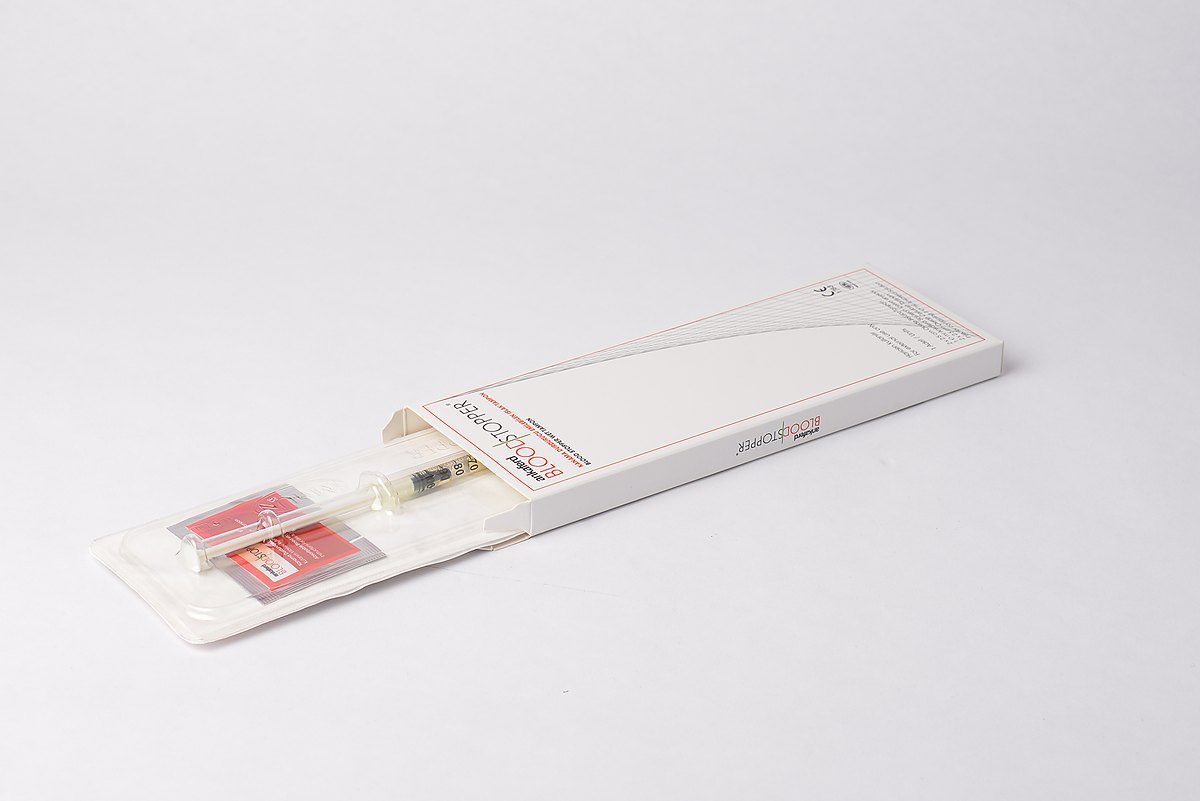
Absorbable wound dressing in its sterile sleeve with the pre-filled applicator
Absorbable wound dressing: sterile blister with the single-use pre-filled applicator
Sterile blister with the single-use, pre-filled applicator.

02Surgical · clinical

Absorbable wound dressing

German name: Absorbierbare Wundauflage

An oxidised regenerated cellulose (ORC) pad carrying the ABS solution, delivered with a pre-filled, single-use applicator. It is placed by a clinician in surgical, endoscopic or laparoscopic settings.

Intended use
Surgical, endoscopic, laparoscopic; placed by a clinician (per the manufacturer)
Sizes
Dental: 0.5 ml (1 × 2.5 cm), 1 ml (2 × 2.5 cm). Other: 2.5 ml (2.5 × 5 cm), 5 ml (5 × 5 cm), 10 ml (5 × 10 cm)
Pack
1 sterile set
PZN (Germany)
17901658 (0.5 ml)  |  17901687 (1.0 ml)
Absorption
Per the manufacturer, absorption begins in 7–14 days and is roughly complete by about 40 days
Caution
Not to be placed into a vein (per the manufacturer)
Where to buy
For hospitals and clinics: contact the team

The manufacturer, İmmün Gıda İlaç Kozmetik, also produces other forms; the two above are what we distribute.

Storage & handling

Per the manufacturer, both products are sterile and kept at room temperature, with no cold chain. The values below follow the manufacturer's Instructions for Use. Always follow the label and Instructions for Use.

Temperature
Room temperature (0–25 °C)
Light
Protected from sunlight
Shelf life
4 years (from production to the use-by date)
After opening
Single-use — use once opened
Single use
Yes — single-use, sterile
Disposal
Dispose as medical waste

How to apply · Push & Stop

Three steps, in order.

The Instructions for Use take precedence.This is an illustrated overview of the first-aid product, not a substitute for the Instructions for Use. For the exact wording, quantities and contact times, read the Instructions for Use.

  1. Push & Stop applicator, closed, with its press lid

    01Press in

    Press the lid.

    Start with the applicator closed. Pressing the lid releases the solution into the dry cloth.

    Instructions for UsePress the middle of the lid; the solution reaches the cloth (per the IFU).

  2. Pressing the Push & Stop lid releases the solution-soaked cloth

    02Soak

    The cloth soaks up the solution.

    The dry cloth takes up the plant-based solution and emerges from the applicator.

    Soaking timeAbout 3 seconds (per the IFU).

  3. Push & Stop with the soaked cloth raised from the applicator

    03Apply

    Press it onto the bleeding site, and hold.

    Press the soaked cloth onto the bleeding surface and hold it there. A protein network forms on contact with blood⁠2. If bleeding has not stopped after five minutes, use a new tampon; if it still does not stop, use another method and seek medical care (per the IFU).

    Contact timeCheck after 5 minutes (per the IFU).

The absorbable wound dressing is a different setting: placed by a clinician.It is not a self-care step. A clinician places the oxidised regenerated cellulose pad with its pre-filled, single-use applicator in a surgical, endoscopic or laparoscopic setting, and it is not to be placed into a vein (per the manufacturer). Placement, quantity and contact time follow the Instructions for Use.

Always

  • The Instructions for Use govern preparation, quantities and contact times.
  • In Türkiye it is approved for local applications in dental and superficial bleeding⁠2.
  • Indication-specific guidance, including for people with haemophilia, diabetes or high blood pressure, is set out in the Instructions for Use.

Avoid

  • Direct application on exposed neural tissue. Potential neurotoxicity was seen in rodents, and the risk after direct nerve exposure is debated⁠2.
  • Treating research uses as established. Wound-healing, antimicrobial and antineoplastic effects must be regarded as investigational⁠2.
  • Contraindications: none are known per the Instructions for Use.

How it works · proposed

Beside the cascade, not through it.

The proposed mechanism in one picture. The science page goes molecule by molecule, with every study behind it.

Ankaferd · proposed pathway

  1. ABS SOLUTIONRED CELLS

    Contact with blood

    A protein network forms in under a second on contact⁠2.

  2. PROTEIN NETWORKFIBRINOGEN γ

    A protein network

    Its effect is proposed to depend on the quick promotion of a protein network, particularly fibrinogen γ⁠4.

  3. AGGREGATE

    Red cells aggregate

    Reported to be tied to vital erythrocyte aggregation via spectrin, ankyrin and actin on the cell membrane⁠4.

Coagulation cascade · measured during use

  • V
  • VII
  • VIII
  • IX
  • X
  • XI
  • XIII
  • PT
  • aPTT

Reported as normal during administration: it acts without directly affecting individual coagulation factors⁠2⁠4.

Fig. 2Proposed mechanism for the shared ABS solution, simplified. Illustrative, not to scale; the cascade is shown only as the values measured in studies.

Why it matters: because its effect is reported not to depend on the cascade, it has been studied in dental bleeding in patients with haemophilia and von Willebrand disease, and in anticoagulated patients⁠4. Those studies are mostly small.

Read the full mechanism

Questions

Asked, and answered plainly.

Something missing? Ask the team, or browse the evidence library.

What exactly is Ankaferd Blood Stopper®?

An entirely herbal, topical haemostatic: a standardised mixture of extracts from thyme, liquorice, grape vine, lesser galangal and stinging nettle⁠1. It is applied directly to a bleeding surface.

How quickly does it act?

Network formation, not bleeding control, is what is reported as under a second⁠2. See how it works; bleeding outcomes are reported per study in the evidence library.

Does it work for patients on anticoagulants or with bleeding disorders?

It acts without directly affecting individual coagulation factors. Factors V, VII, VIII, IX, X, XI and XIII, PT and aPTT were normal during administration in studies⁠2⁠4. It has been studied in dental bleeding in anticoagulated patients and in patients with haemophilia or von Willebrand disease⁠4. Most of those studies are small, so treat this as promising, not settled.

Is it approved, and where?

It is approved by the Turkish Ministry of Health for local applications in dental and superficial bleeding⁠2. In the EU it is a CE-marked medical device (Class III, Directive 93/42/EEC, notified body TSE) for the topical control of external bleeding, distributed in Germany; its status in other regions is still being confirmed.

What is known about safety?

It tested negative for heavy metals, pesticides, aflatoxins, GMO material and dioxins⁠4. The evidence base is largely in vitro, animal and small clinical studies, and the authors call for controlled trials⁠2. The neural-tissue caution is in the Avoid list; the full safety profile covers the rest.

Which of the two products is right for me?

Push & Stop is the first-aid product: press the lid, and the dry cloth soaks up the solution, ready to press onto the bleeding site. The absorbable wound dressing is for surgical, endoscopic or laparoscopic use and is placed by a clinician. The products section sets them out side by side. Guidance for a given indication is set out in the Instructions for Use.

What about the nanofibre dressing and nanohemostat?

Both are research forms made by the manufacturer, not products we distribute, and are investigational. The same goes for wound-healing, antimicrobial and antineoplastic uses, which must be regarded as investigational⁠2.

Where can I get it?

In Germany, Push & Stop is sold via the online shop doc3.de and in pharmacies; the absorbable wound dressing is for hospitals and clinics, so contact the team. Availability elsewhere depends on your country: find a distributor.

Where do I get the full Instructions for Use?

You can download the Instructions for Use (PDF, in German or English) on this page. If you need another format or have a question about them, get in touch.

What is still open

  • Much of the evidence is in vitro, animal or from small clinical studies. Larger controlled trials are called for⁠2.
  • Non-haemostatic uses remain investigational⁠2.
Safety and evidence, in full

For healthcare professionals

Need the full Instructions for Use?

Download the Instructions for Use below, in German or English, or ask the team for pack details for your market and help choosing between the two products.

References on this page (4)
  1. [1]Simsek C, Selek S, Koca M, Haznedaroglu IC. Proteomic and transcriptomic analyses to explain the pleiotropic effects of Ankaferd blood stopper. SAGE Open Med. 2017;5:2050312117722569. doi:10.1177/2050312117722569
  2. [2]Tibi SE, et al. Beyond hemostasis: a narrative review on the multifaceted therapeutic potential of Ankaferd Blood Stopper. Ann Med Surg. 2025/26;88(1):522–533. doi:10.1097/MS9.0000000000004388
  3. [3]Wikipedia contributors. “Ankaferd Blood Stopper.” Wikipedia, The Free Encyclopedia. Encyclopaedic secondary source, used here for history and status only.
  4. [4]Çiftçiler R, Haznedaroğlu İC. Ankaferd hemostat: from molecules to medicine. Turk J Med Sci. 2020;50(7):1739–1750. doi:10.3906/sag-1908-161